Sunday, March 22, 2020

Blog #8: Service Learning Idea

Let me just first say, wow these last couple of weeks have been a complete whirlwind of so many emotions, experiences, and struggles. Although I am exhausted, I look forward to getting into a new routine to finish out this semester - especially getting back to feeling a sense of normalcy.

I learned so much from Em Hersch's visit in general, but her discussion of being an ally for LGBTQ+ youth, staff, and colleagues. I found that the handouts provided during this discussion were equally as helpful. Although it was a very honest discussion, I felt comfortable asking clarifying questions. I found this experience to be extremely beneficial for my future as an art educator. It is my job as a teacher to be aware of the support that each of my students will be needing. I found that hearing the statistics that Em gave, were really eye opening for me. I now know how important it is for any student, especially LGBTQ+ students to feel safe and comfortable with who they are in social settings. As a teacher it is my job to build a classroom environment where students feel that they can truly be supported for being themselves. I look forward to using some of the resources provided in the future. Especially the websites that provide LGBTQ+ learning opportunities. This is just another instance where a teacher is an endless learner. If I continue to learn, my students will be better because of it. I LOVED how cute the Gender Unicorn handout was! It made the talk about the many different genders easier to grasp. I often found this topic to be really difficult to talk about and discuss but I honestly feel like I took so much away from it. 

It is also important to me that my colleagues feel supported, safe, and comfortable within their work environment. It should be a place where we all support each other regardless of our own personal beliefs. It is also extremely beneficial to know the laws in place to support work place equality and just equality in general because you are more aware of the discrimination that exists within our own homes, communities, and the world around us. I believe that the more people have discussions like the one we had with Em the more accepting people will become. It just takes one ally at a time to make a difference in a student, a colleague, or a staff member. 
Image result for be an ally LGBTq+

Sunday, March 8, 2020

Blog #7: 3 Big Take Aways From This Weeks Readings

This week we read, "Banners for Books: “Mighty-Hearted” Kindergartners Take Action through ArtsBased Service Learning" and "Engaging a Developmentally Disabled Community Through Arts-Based Service-Learning".  Both of these readings covered research and information on the influence art-based eduction and service learning projects have on very young kids as well as the developmentally disabled community.

I found three big concepts to take away from these readings. The first one came from the first reading listed, "Banners for Books: “Mighty-Hearted” Kindergartners Take Action through ArtsBased Service Learning".  It quite honestly seemed nuts to me that we would try to teach kindergarteners about Article 26- of the Universal Declaration of Human Rights (the right to education). It just seemed like it was too much for them, ya know what I mean? As I continued to read the article, my thoughts changed... it is possible to teach subjects like this. The could handle that there were educational inequalities around the world. It was really interesting to me that the students were able to distinguish their privileges and educational rights. They were also empathetic for other students around the world the same age as them. Then they took action. The project made was a screen printed banners. The students raised money with these banners to purchase books to send them to a newly built school in El Salvador. They made $800. It just showed me that students of all ages can handle dense subjects when taught in a thoughtful and intentional way. Ultimately improving our local and our global community. Kindergarteners making a difference and uniting us all. 

The second also came from the same reading, it spends time explaining how influential the teacher in this situation was. She was the person that reached out to a professor for resources. She knew how important it was to include art based service learning within her classroom. She believed in their abilities and knew that their mighty hearts could make a difference in the world. At the end of the article it says, "She showed care for her students, and they then showed care for the world." This is the impact we can all have on our students. I want that, you should all want that too. I truly think that it's part of our job as educators. We have to be willing to go out on a limb for their opportunities and they will become better human beings. The students' drawings were a tell tale sign of how their care, innate feelings of fairness, and awareness were present. They included the ♥️ symbol often drawn with a picture of their teacher, peers, and in one instance Nelson Mandela's portrait. Many students also showed a want for further connections to their counterparts at the school in El Salvador. It seemed like a truly amazing experience to be a part of. I recently heard this quote, "Be the change you want to see in the world".  Let's all take a step towards making a difference, I sure am ready to.

Image result for service learning art projectsI was able to also pull a big idea from the reading,"Engaging a Developmentally Disabled Community Through Arts-Based Service-Learning".  I don't think I actually realized how influential service learning projects are for pre-service teachers. After reading this article it's not only beneficial for the people being taught but the pre-service teachers as well. I believe that it prepares us for our career in many ways and also makes us much more aware of civic -minded ideals. I know that we will soon hear all about the art based service learning project that we will be participating in and this article makes me really look forward to the opportunity being presented to us! 

Sunday, March 1, 2020

Blog #6 African American Read In and Conference

I will first start out by saying... I had so much fun teaching a braiding lesson and helping out with the stamp lesson on Thursday at the African American Read In. I was exhausted by the end of the day. I thoroughly enjoyed working with the different groups of 1st graders. I fully believe that it is extremely important for students to be exposed to African American authors and illustrators and for our African American kids to see that there are authors and illustrators out there that look like and share the same culture as them. I had the opportunity to work with many great elementary education volunteers, and they were extremely helpful when making sure that everyone got the help they needed. I found that if the large demonstration didn't fully make sense to all students, it worked well when we could give small demonstrations over while they were practicing braiding on their own. All kids ended up with at least one bracelet. We also found it helpful to reexplain with their own braid, basically letting them do it as one of us explained how to do it. Here is a page from the book if anyone is interested it's titled, "I Love My Hair".

Image result for i love my hair
I had the opportunity to have a conversation with a little African American girl where we talked about braiding, where she learned to braid, and how that fits into her family culture. She explained to me that she can't braid her own hair, but she spends time braiding the hair of her cousins and sisters. I think about how important hair is to African American culture. I read a book about this little African American girl loving her hair and the different styles that her mom fixes it in. It made the little girl I was able to have a conversation with so proud that she could already braid. She ended up making like three different braided bracelets. The thing that I took from this interaction is how important it is for my students to feel cultural representation and making it personal for them. I got to see the effect of this first hand and it will be a moment I won't forget.

Diversity matters. Feeling supported and represented matters. I knew going into Thursday that first graders had an amazing imagination, but their ability to listen to the book in the stamp making session and make a stamp based on something so emotional and still be able to be imaginative - The birthday cakes, horses, and scenes drawn and colored were amazing. I loved listening to the stories based on what they interpreted and imagined from the book. They are able to handle a book like that talks about slavery and to be honest I didn't know that they could handle a book that was so emotional. It was such a great experience talking to many students and what they came up with for their stamps. The room was full of some pretty great little artists. ♥️


Sunday, February 23, 2020

Blog #5 Junior High Visit Reflection with Connections to Class Readings

We will start off this post by just quickly reflecting on the AMAZING experience that was the junior high visit/ art installation completion last week. I had a blast working with them, watching my specific group of five students plan and paint their pieces, and then watching them as an entire class figure out how to arrange all of the pieces on the big sheet of plywood. It makes me really excited to bring in CBAE within my own classroom in the future. I was able to spend most of the day with the students while they were on campus and it was a gratifying experience.

I was able to make a few connections to some of the readings that we've had lately. We have also been talking a lot about culturally responsive teaching in my Human Relations course this semester. In the article, " The Family Quilt Project: The Power of Culturally Relevant Pedagogy" it talks about how the quilting project arose all over the community, enabled families to explore their own cultures, and others' cultures and histories. It became an amazing outpouring of stories, and most importantly a sense of "self- understanding" and "other understanding." Something that connects this and the opportunity with the junior high students is that the teacher involved and our professor Dr. Miller were able to work together to build a project with these students and UNI students to help continue to put an importance on building up school community. This project will continue to engage families and build school community as long as it's up in the cafeteria. 

The second connection that I was able to relate it to the article, "Culturally Responsive Teaching for 21st Century Art Education". Right off the bat the article talks about how important culturally responsive teaching is to how students and teachers interact with each other. Another few reasons why this is important are teaching students how to ultimately understand cultures outside of their own and promote social inclusion. This comes into the picture with our visit with junior high students because the goal of this CBAE project was to promote all of the same things listed above to build school community. The students wanted this piece to genuinely represent their school and all that encompasses within all students. 

In my Human Relations course we have been doing a lot of class discussion on topics related to culturally responsive teaching. One thing that has stuck out to me recently in that class that closely relates to the ideas that we've been talking about in this class, that is the idea about community inclusion and how to get students, families of students, and the general community involved. In my opinion we (Art Education) have done this by working collaboratively with the junior high students. They were able to come spend the day at the university doing things that are not normal school day activities. We were providing them with an opportunity that not all students get to do. Overall the day was super great and loved being a part of it. I look forward to seeing it up on the wall completely done. 

Sunday, February 16, 2020

Blog #4: Chapter 3: Community- Based Art Education Across the Lifespan


With the Junior High Students visit quickly approaching I can't help but be excited. I really am looking forward to completing this project with them. When reading chapter three in the book the first header that stuck out to me was, " Work With the Community to Develop Pride" and that is exactly what were doing - encouraging school pride because each piece of the installation correlates to a part that students are proud of as well as encouraging it within the school culture. In this section on page forty-two it talks about leading all participates to broaden their idea of art. I feel like we have already begun to do this with the students and will continue to become more prevalent as we finish this up with them. A quote that stuck out to me was, " This can lead all participants, including the facilitators, to broaden their definition of art - including who is an artist - and expands the realm of possibilities in which artists live and work, and by which they enrich our communities daily." I feel as though we are doing this with the junior high students and with us as UNI students. We are enriching our community and it makes me excited for the end result.

I was also able to connect this project with the, "Work With Community to Express Identity" section of chapter three. It encourages us all as stakeholders to creatively express a sense of self,  sense of place, and a sense of community. I feel that we are encouraging the junior high students to do this in their installation because it is solely based on the things that they thought were most influential to their school and what they wanted this piece of art to be a representation of. It states in the section, " We are developing strategies for "life- long, self -determined, multi-contextual skills for productive and creative participation in society." I feel like this should be something we all strive for and if we encourage this with the future generations of students we are helping them become better people, and that's part of our job as educators isn't it? We could all use a little more connection between each other so why not make art.

"We develop understanding through validating diversity and contextualism" was a quote in chapter three that really got my wheels turning. If we encourage CBAE in our classrooms this will lead to all participants gaining a better understanding of others' opinions, lives, and experiences. We can build a lot of trust when working on something together because of the discussions, learning, and conversations that happen while art making.

Being able to complete this project at UNI provides a lot of resources that may not have been possible at a public junior high. Working collaboratively is bettering all stakeholders involved. Partnering with UNI Art Education and students was really influential to the success of making this installation. In chapter three it has a section on partnering with institutions and although we've only had a little bit of insight on the necessary planning, I can see that it is extensive with time management of the project, materials, funding, space needs, etc. These all had to be figured out to make this project work and let me tell you, I am only a very small portion of this. I think that it will really help me in the future as an art educator that wants to encourage community based art education in my own classroom setting. 
Image result for community based art education                                                                                                                                               

Sunday, February 2, 2020

Blog #3: Chapter 2: Community-based Art Education Across the Lifespan

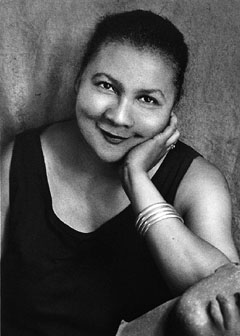
I am going to focus this post on Bell Hooks, engaged pedagogy, and andragogy. I am also going to spend some time connecting and reflecting on the new knowledge gained from spending my morning at the "Supporting Emergent Bilingual Learners and Their Families” workshop. Bell Hooks was a social activist writer and author, who spoke to the phobias that inhibit society from moving forward into the future in a more positive and culturally inclusive way. The discriminatory practices such as racism, sexism, gender bias, classism, religion, etc all contribute to the challenges that education reform has to deal with. Hooks explains that if we can succeed in preventing the boredom, disinterest, and apathy that both teachers and students feel about the overall teaching and learning experience. 

Image result for bell hooks' engaged pedagogy a transgressive education for critical consciousness"

An engaged pedagogy means that learning and teaching is engaging because it connects to their lives, supports student empowerment,  encourages a society where multiculturalism is important, and learning is intrinsically motivating. 

CBAE artist educators build curriculum that are culturally responsive to student learning needs and backgrounds. It encourages students to be transgressive, which basically means to encourage students to question and crush barriers, be self expressive and empowered, and the most important being using collaborative creative efforts. Simply, it motivates students to use personal and collective creative expression within a community ultimately encouraging empowering and transformative experiences. 

I had the opportunity to spend some time at a workshop for emergent bilingual learners and their families. It was quite an eye opening experience to me and the need for resources are only going to grow because the number of people migrating to the midwest continues to grow. I also learned that the resources available aren't as available as I thought they were. I do recognize now how important it is for me as a future educator to be aware of the bilingual students in my classrooms and how I can include their families just like I would with students who have parents that speak english. I think I also need to make sure to build a community where cultural inclusivity is an important aspect of classroom environment. After this experience I am more aware of ways that I can do to encourage family and student normalcy at home, for example; working on homework together. 
Image result for bell hooks' engaged pedagogy a transgressive education for critical consciousness"

Blog # 12: Mindfulness and Social Emotional Learning

My new knowledge on trauma, mindfulness, and social emotional learning impacts my understanding of my future students lives and my role in ...